
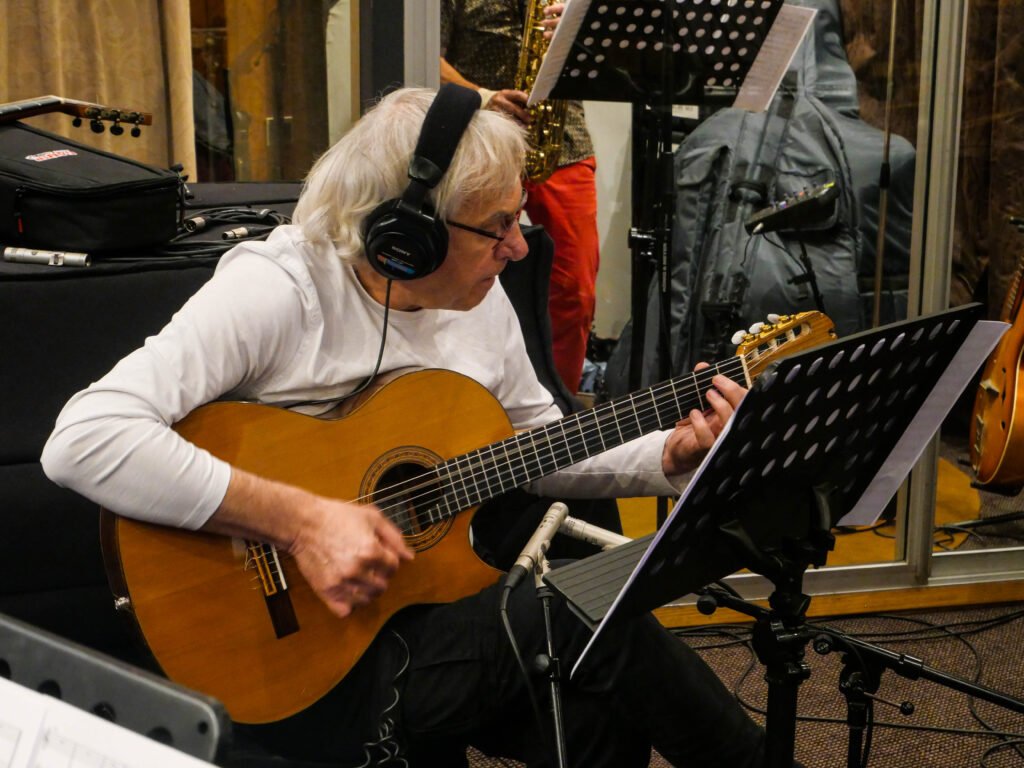
MUSICA Magazine: You studied classical guitar with renowned masters, including Alberto Ponce and Raphaël Andia. What is the most important artistic lesson you took away from those years of intensive study?
JEAN DE AGUIAR: Both Alberto Ponce and Raphaël Andia reached such an extraordinary level of technical skill and musicality that they are both an inspiration and a goal for their students to aspire to.
It is important to understand that they are the last representatives of the pure Spanish school, established at the beginning of the 20th century by Francisco Tárrega, Miguel Llobet and Emilio Pujol. In this sense, they pass on not only a musical technique, but also a philosophy of playing that gives equal importance to instrumental technique and artistic sensitivity.
Raphaël Andia is still alive and lives in Paris. You can follow his teaching on his YouTube channel, listen to his albums, or read his essential book, Le geste du guitariste (The Guitarist’s Gesture).
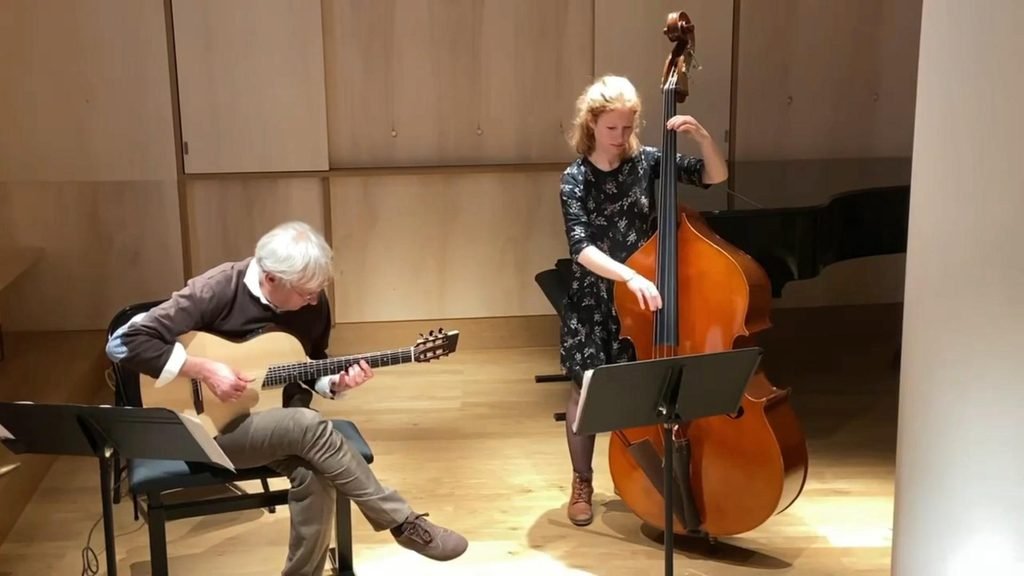
MUSICA Magazine: You also hold a qualification in Baroque guitar. How has early music influenced your phrasing, technique and approach to contemporary composition?
JEAN DE AGUIAR: Studying and playing early music, particularly music from the Baroque period, allows you to see music from a more flexible perspective than the much more rigid approaches to playing that we often encounter today.
During the 17th and 18th centuries, it was not unusual to improvise an unwritten part, change the rhythms of a piece, cut sections or add new ones, and so on. On this subject, I recommend Antoine Geoffroy-Dechaume’s book Les secrets de la musique ancienne (The Secrets of Early Music).
I have the impression that musicians of the past understood their technical level exactly. They did not try to exceed it, but instead improvised, changed forms and always brought sensitivity and humanity to their music.
I draw inspiration from this when playing or composing things that may initially appear simple, but which can evolve over time or according to inspiration.
MUSICA Magazine: South American music, jazz and improvisation all occupy an important place in your artistic identity. How do these different traditions interact within your work.
JEAN DE AGUIAR: I love music that comes from dance. This is true of South American music — salsa, merengue, samba, milonga and so on — as well as swing jazz, which had the whole world dancing from the 1920s onwards.
Even Baroque and classical music, right through to the 20th century, draws upon dance suites — the sarabande, waltz, minuet and so on. We talk about “Viennese waltzes”, Chopin’s “mazurkas”, and of course Maurice Ravel’s Boléro.
Personally, I am not a great improviser; I am not talkative enough in everyday life for that! On the other hand, I enjoy taking risks during a performance and changing the way I play a piece when performing it live.
